USA | South Dakota | Crazy Horse Memorial

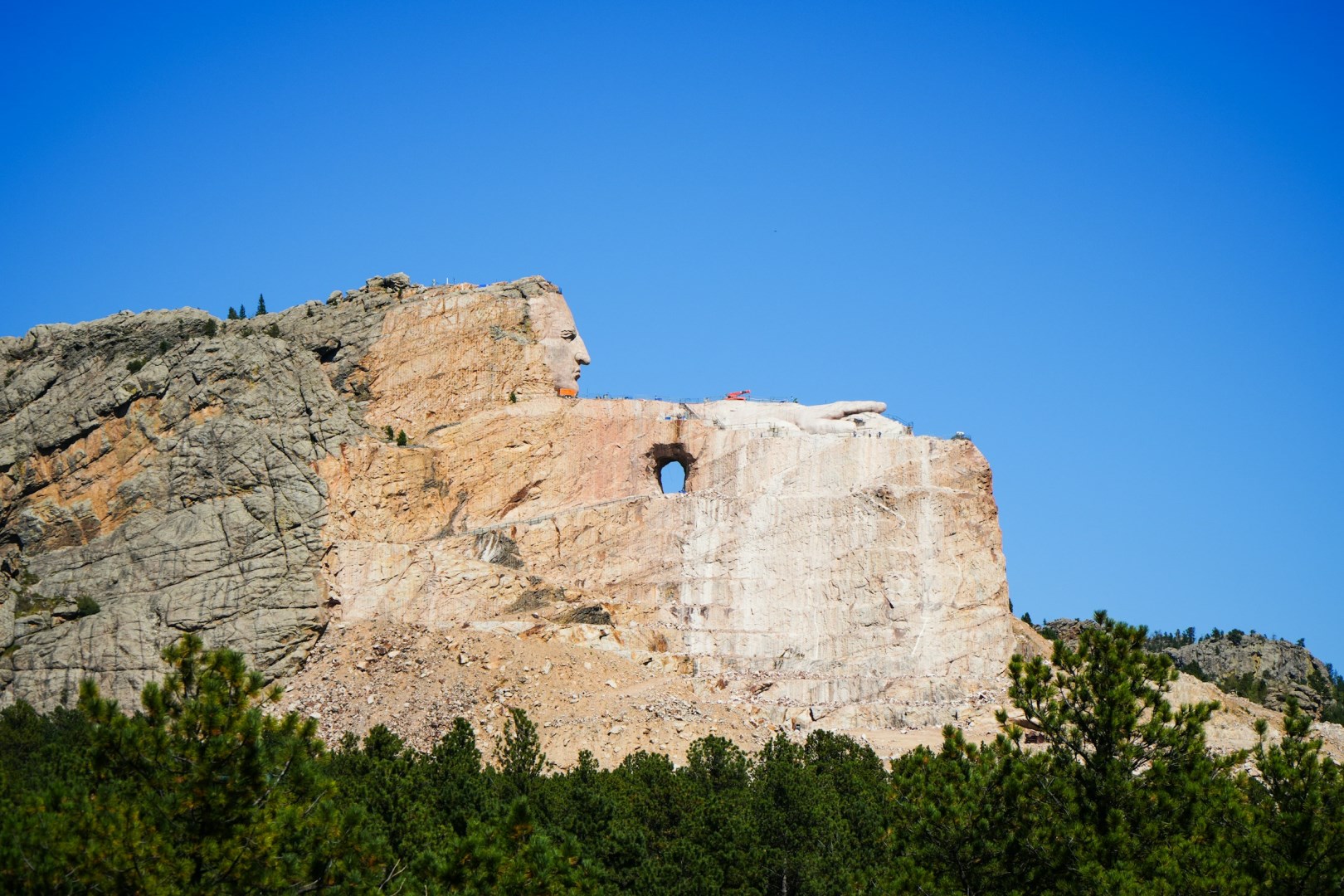
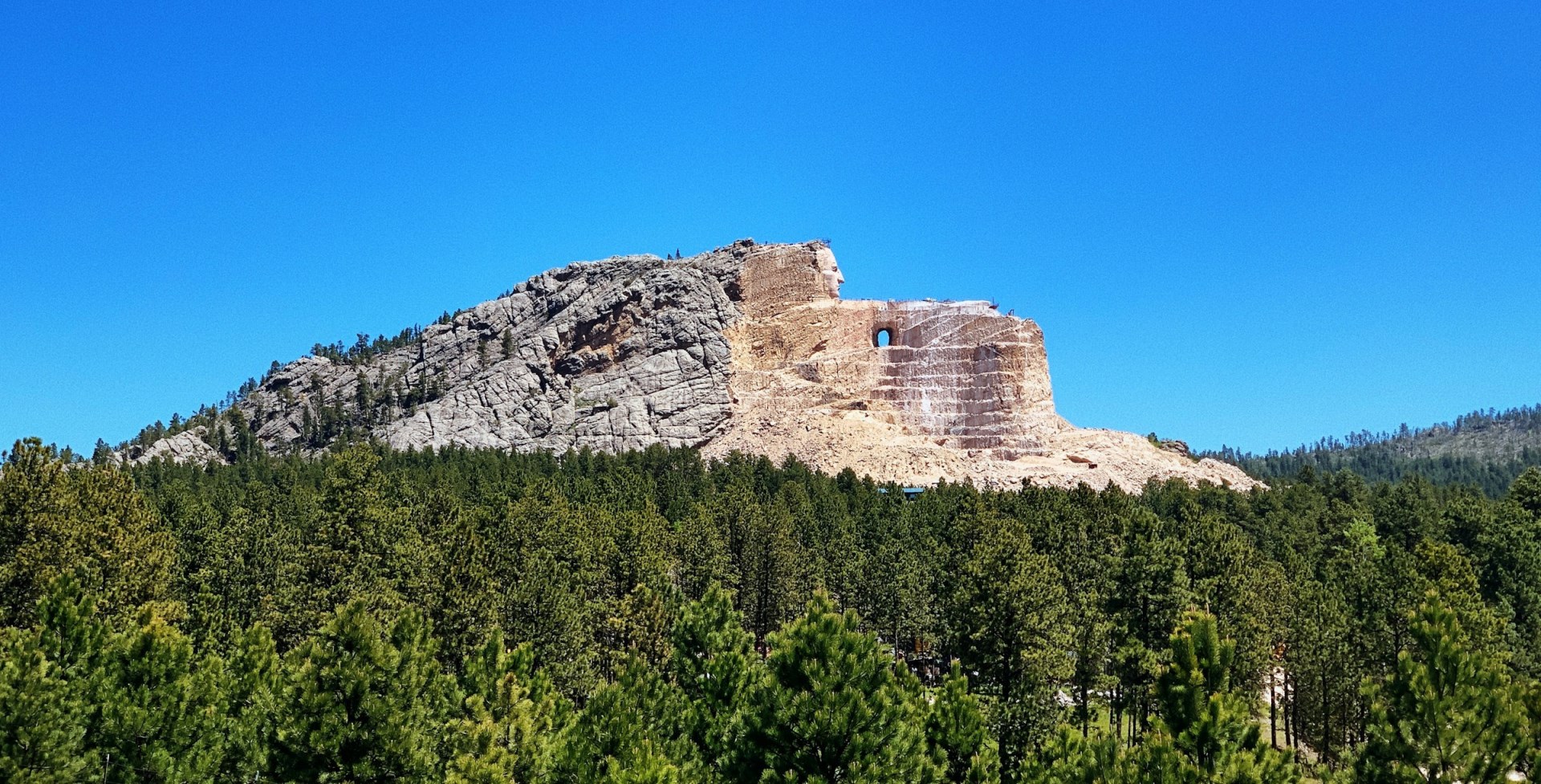
Crazy Horse Memorial stands in the Black Hills of South Dakota, between Custer and Hill City, where a massive mountain carving is being created to honor the Lakota leader Crazy Horse and the cultures of Native American peoples. The sculpture is cut directly into Thunderhead Mountain and is designed to depict Crazy Horse on horseback, pointing toward his ancestral lands. The unfinished carving remains an active project, making the site different from a completed monument. Beyond the mountain itself, the memorial includes museums, galleries, educational facilities, cultural programs, and views across the surrounding Black Hills landscape.
The memorial grew from the vision of Lakota chief Henry Standing Bear, who wanted a place that would preserve and celebrate Native American heritage. Sculptor Korczak Ziolkowski was invited to create the mountain carving, and his family continued the work after his death. The memorial’s cultural mission extends beyond Crazy Horse himself, with programs focused on the histories, traditions, arts, and living cultures of Indigenous peoples. The Indian Museum of North America holds collections representing more than 300 Native Nations, while the Native American Educational and Cultural Center provides additional opportunities to learn about Indigenous cultures and traditions.
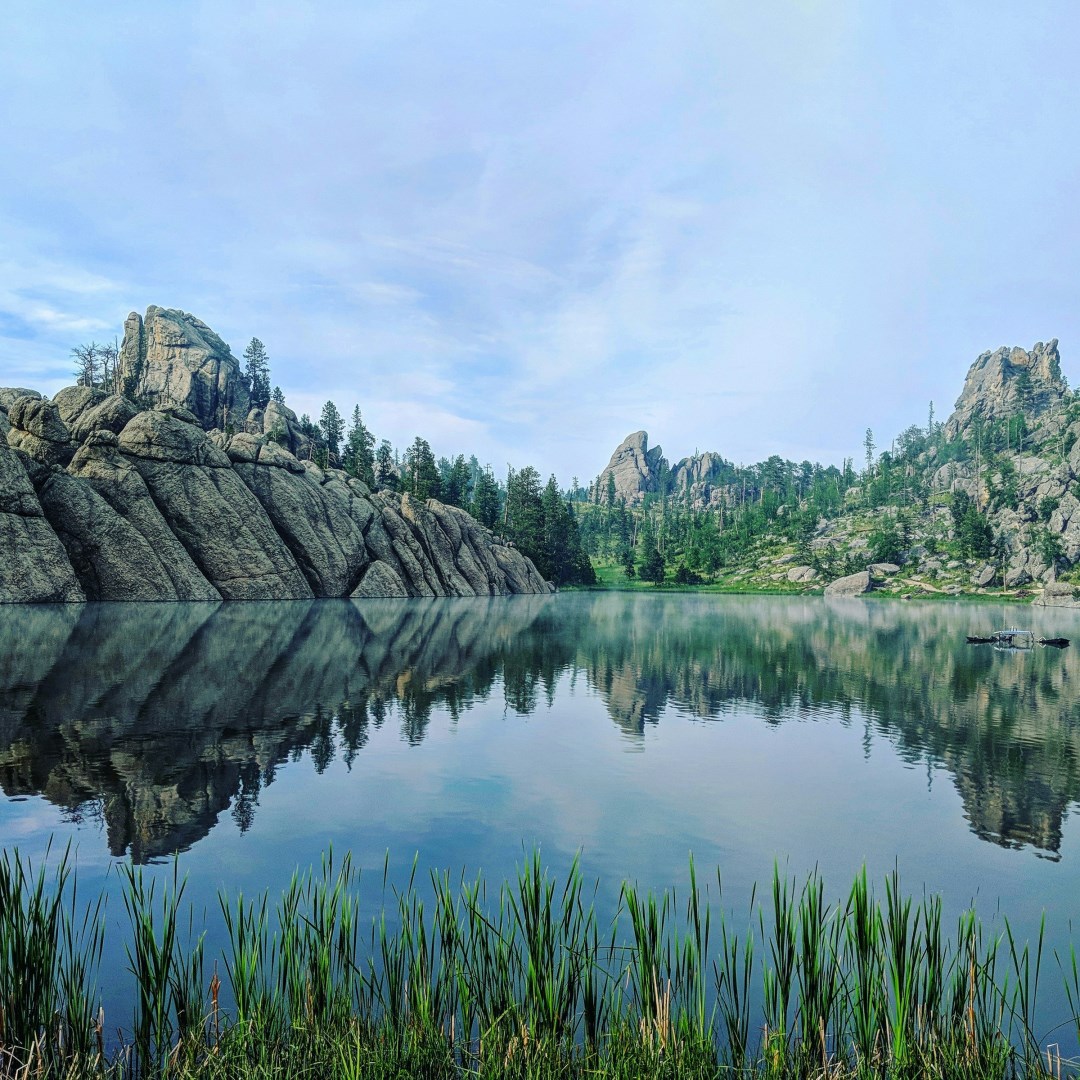
The mountain carving is the main attraction, with the completed face of Crazy Horse visible from the memorial grounds while work continues on the surrounding figure and horse. Visitors can view the sculpture from the veranda and wall of windows or take an optional bus ride closer to the mountain. The grounds also include the Ziolkowski Family Life Collection, sculpture galleries, and the original log studio-home associated with the sculptor and his family. The memorial’s location within the Black Hills places it among pine-covered ridges, granite formations, and the wider landscapes of southwestern South Dakota.
Food and cultural experiences are available on the memorial grounds, including a restaurant and snack shop, while the site also hosts programs featuring Native American music, dance, storytelling, arts, and demonstrations. One of the memorial’s distinctive features is that admission supports the continuing work of the nonprofit foundation, which does not rely on government funding for the carving. The project is therefore both a monumental sculpture and an educational institution. Its museums and cultural programs encourage visitors to look beyond the mountain itself and explore the diverse histories and traditions of Indigenous peoples across North America.
Other Popular Destinations in South Dakota